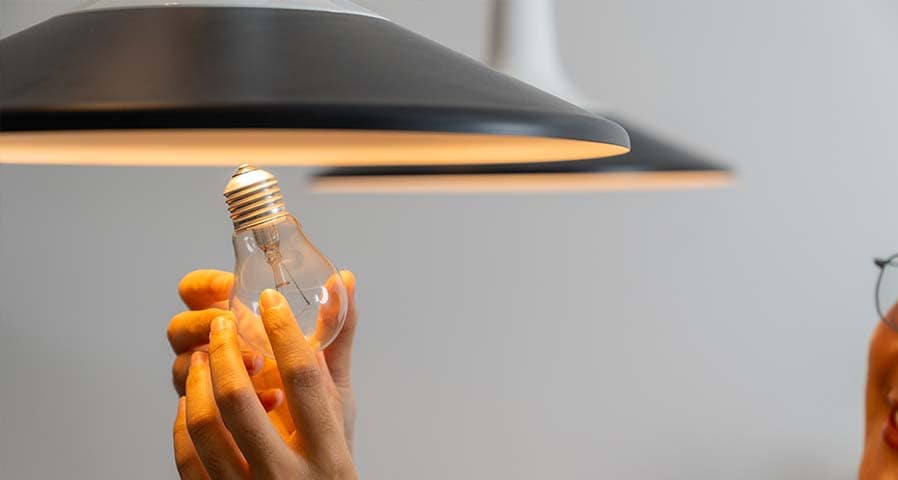
Replacing a household lamp looks straightforward until two bulbs with the same base produce very different results. One spreads light in every direction, another concentrates it below the fitting, and a third has a frosted envelope that changes how bright the lamp appears from a chair. Wattage alone cannot describe these differences. A reliable replacement process begins with the socket and electrical requirements, then considers the amount, direction and colour of light needed in the actual room. The outcome is a fitting that remains practical after the packaging has been discarded.
Confirm the socket and electrical limits
The printed base designation is the first item to check. Screw bases such as E27 and E14 differ from pin and twist-lock formats, and a lamp cannot be selected by the size of its glass envelope alone. Record the existing lamp’s full designation, supply voltage and physical dimensions. Check whether the luminaire has a cover that limits the maximum diameter or length of a replacement. A tall bulb can fit the electrical socket yet prevent a diffuser from closing or bring the light source closer to a visible opening.
The luminaire’s rating and the lamp manufacturer’s instructions remain relevant even when the replacement consumes less power. Some products are restricted in enclosed fittings, and certain low-voltage lamps require an appropriate transformer or driver. A lamp connected to a control circuit also needs to suit that arrangement. Treat these as product-specific questions, not assumptions based on the familiar appearance of a bulb. If the existing fitting has damaged contacts or unsuitable wiring, the electrical issue requires attention before a new lamp is installed.
Read lumens, beam angle and room geometry together
Lumens describe the total amount of visible light emitted by a lamp, while wattage describes its electrical consumption. These measurements answer different questions. A lamp with a high lumen figure can still perform poorly on a table if most of its light travels toward the ceiling. A directional lamp with a smaller total output may illuminate a defined work surface more effectively. Beam angle is especially relevant to spot-type lamps and fixtures where the orientation is fixed by the socket.
Consider the distance from lamp to target and the reflectance of surrounding surfaces. A pale ceiling returns more light to a room than a dark one; a deep shade may absorb or redirect part of the output. In a corridor, broad distribution can provide continuity between fixtures. Above a display object, a tighter beam can establish emphasis, but the same beam could produce uncomfortable contrast in an area used for reading. Select a replacement for the complete luminaire and room, not for a numerical specification in isolation.
Compare colour temperature and colour rendering
Correlated colour temperature describes the appearance of white light. Lower values tend toward a warm tone, while higher values appear cooler. Warm light can suit a bedroom or seating area in the evening; neutral white may be useful where people prepare food, examine documents or distinguish materials. In an open room, lamps with noticeably different white tones can make adjoining surfaces look inconsistent. Replacing only one bulb in a multi-lamp fixture deserves particular care because mismatched colour can be obvious even when brightness is similar.
Colour rendering provides another layer of information. Two lamps with the same nominal white appearance may make fabrics, vegetables or painted finishes look different. For a dressing area or a shop display, compare the manufacturer’s colour-rendering information along with light output. When comparing LED Lighting for several spaces, make a small list of the light characteristics already working well in the property. That reference reduces accidental variations as individual lamps are replaced over time.
Understand the role of shades and diffusers
A clear lamp envelope exposes small bright points more readily than a frosted one. The difference becomes significant in a pendant with an open shade or a wall light close to eye level. A diffuser spreads and softens the visible source, but it also changes the apparent shape of the light and can reduce the amount directed at a specific task. Review the entire fitting from normal seated and standing viewpoints, particularly where mirrors, glass doors and polished furniture create reflections.
The lamp’s emitting pattern should complement the shade. A decorative pendant intended to glow on all sides may look uneven with a narrowly directional replacement. Conversely, a recessed spot requires suitable downward distribution rather than light emitted mainly sideways inside the housing. For multi-lamp fittings, keep replacements consistent so that adjacent shades do not differ in intensity or appearance. A short installation trial in one representative position can prevent an expensive order of poorly matched lamps.
Check dimming and switching behaviour
A lamp labelled as dimmable still needs a compatible control arrangement. Different dimmer designs and lamp electronics can produce flicker, a restricted dimming range or unstable switching. Read the product’s compatibility information and consider testing one lamp before changing an entire circuit. Where a fitting contains several lamps, replacing only some with a different electrical design can also affect performance. The practical goal is smooth useful adjustment, rather than a theoretical brightness setting that the installed control cannot reproduce.
A motion sensor or timer introduces further operating conditions. Some control devices draw a small current while switched off, which can interact with particular lamps. Product instructions and the wiring design should guide the selection. For a stairwell or entrance, predictable activation is as important as brightness. Record any special control requirements alongside the lamp reference so that a later replacement does not introduce a fault into a previously reliable installation.
Buy for serviceability, not just initial appearance
A well-chosen replacement remains easy to identify and reorder. Note the full base type, electrical rating, luminous flux, colour temperature, beam characteristics where relevant and physical size. Keep a record of the rooms that share the same lamp so that stock can be consolidated sensibly. For hard-to-reach fittings, service access and manufacturer guidance on operating conditions matter more than a small difference in advertised power consumption.
There is also value in checking the replacement against the original problem. If the old room felt dim, identify whether the issue was insufficient light, an unsuitable beam or a shade that obscured the target. Replacing a bulb with a much brighter one may increase glare without correcting the distribution. If the old lamp had an uncomfortable colour, note the new colour temperature so the same result can be repeated. Where several fittings are installed in a row, store one complete reference rather than depending on the appearance of an individual package. A small inventory is especially helpful when a particular room uses an unusual base or directional format.
After installation, inspect the room at the time it is normally used. Read at the table, view the television from the sofa, and look at the fitting from the doorway. Evaluate shadows and glare rather than only whether the room appears bright. If several lamps were replaced together, compare their visible colour once fully operating. This final check turns a routine purchase into a measured improvement in daily lighting.